Shaping change effectively. Improving processes. Getting people on board.
Practical change management and process optimisation for manufacturing companies and SMEs – with a focus on healthy working conditions and the development of skilled workers.
When good ideas fail to take root in day-to-day operations
New procedures have been agreed, but in day-to-day operations, much remains the same. Information gets lost between departments. Managers have to juggle booking appointments, resolving quality issues and guiding their teams through change. There is often not enough time for structured training.
Does this sound familiar?
• New standards aren’t taking hold: working practices differ, responsibilities are unclear and familiar routines persist.
• Coordination issues cost time: queries, duplication of work and missing information hamper the workflow.
• Change creates uncertainty: staff do not fully understand the objectives or implications and feel their experiences are not being taken sufficiently into account.
• Leadership and training are under pressure: day-to-day operations leave little room for support, upskilling and development.
I will help you identify the root causes and develop appropriate measures – working alongside the people who carry out the work on a daily basis.
Practical experience meets occupational psychology
My career began over 40 years ago in the industrial and technical sector. With my background as a qualified electrician, my experience as a trainer for industrial electricians and 17 years’ management experience, I understand day-to-day operations from the perspective of employees, trainees and managers. As Head of Production and Head of Warehousing and Dispatch, I have held responsibility for various operational areas. Since October 2026, I have been responsible for the training of industrial electricians specialising in industrial engineering, industrial business administrators and technical systems planners, as well as for process optimisation. This combination shapes my approach to consultancy: I do not view work processes in isolation from the people who carry them out. For me, organisation, collaboration, workload and skills development go hand in hand.
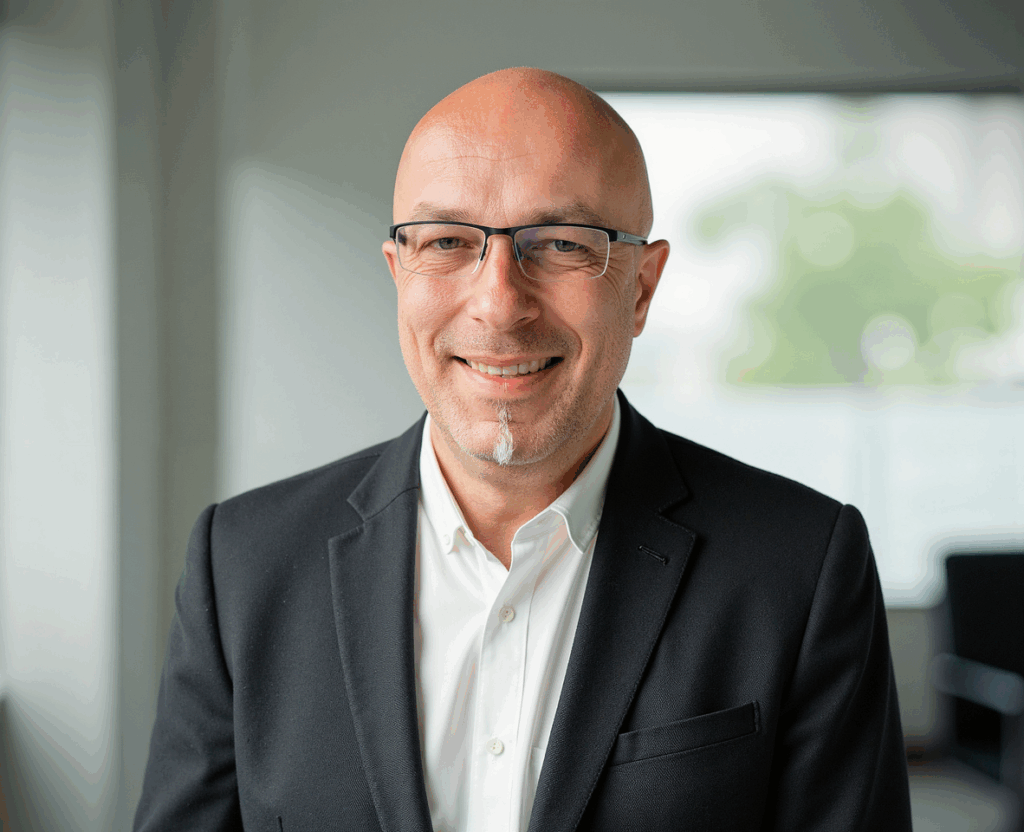
I completed my part-time degree in psychology at the FernUniversität in Hagen, graduating with a Bachelor of Science. My specialism was in occupational and organisational psychology. My bachelor’s thesis explored the link between psychosocial working conditions and health. I am currently furthering my knowledge on the part-time Master’s programme in Psychology at the Hamburg Distance Learning University. Additional qualifications as a stress management trainer, resilience training course leader, Mental Health First Aider (MHFA), mental coach and specialist in psychosocial health promotion broaden my perspective on healthy working practices and personal development. For your organisational challenges, this means that practical experience and psychological knowledge are combined to make processes, collaboration and change initiatives clear and actionable.
Support for change processes & process optimisation
Improving processes – embedding change together
A new process is only useful if it works in day-to-day operations. This requires clear objectives, well-defined responsibilities and the expertise of the people who work with these processes on a daily basis.
I can help you analyse existing working methods, develop improvements and support their implementation. In doing so, we take into account health and safety, quality, costs and delivery capability, as well as workloads and training needs.
My key areas of focus:
• Clarifying workflows and interfaces: investigating disruptions, duplication of work, waiting times and information gaps together with those involved.
• Making changes understandable: communicating objectives, impacts and implementation steps transparently, and addressing questions and reservations at an early stage.
• Supporting managers: Providing guidance on communicating and supporting change.
• Developing practical standards: Describing working methods and responsibilities in a way that is clear and applicable in day-to-day operations.
• Monitoring implementation and effectiveness: Defining measures with assigned responsibilities and deadlines, and reviewing them against agreed key performance indicators.
The aim is not change for change’s sake, but a tangible improvement in your operational work.
Psychosocial health & healthy working
Understanding stress – improving working conditions in a targeted manner
A healthy working environment is not created solely through personal stress management. Equally important are clear tasks, reliable information, appropriate expectations and supportive collaboration.
I support organisations in carrying out risk assessments for psychological stress and in developing appropriate measures. The focus is on working conditions – not on the diagnosis of individual employees.
My areas of expertise:
• Supporting risk assessments for psychological stress: structuring the process, identifying and evaluating stress factors, and providing support with measures and documentation.
• Developing measures targeted at the root causes: for example, in cases of frequent interruptions, unclear responsibilities, time pressure or difficulties in collaboration.
• Strengthening healthy leadership: Raising managers’ awareness of work-related stress and supporting them in organising collaboration in a way that promotes good health.
• Promoting stress management and resilience: Offering practical workshops and training courses to complement efforts to improve working conditions.
• Assessing effectiveness: Jointly reviewing whether the agreed measures are achieving the desired improvements.
In this way, the consideration of psychological stress is linked to concrete organisational work arrangements.
Training Management & Securing a Skilled Workforce
Structuring apprenticeship training – enabling development in day-to-day workplace life
Good apprenticeship training requires more than just an apprenticeship place. It requires clear learning objectives, coordinated work placements, suitable learning tasks and people who provide reliable support to apprentices.
My experience as a trainer for industrial electricians and my current responsibility for industrial, commercial and technical apprenticeship programmes form the basis for this consultancy service.
My areas of focus:
• Structuring training planning: Aligning in-company training plans, departmental placements and learning objectives.
• Developing training sessions and learning tasks: Conveying technical content in a way that is understandable, practical and action-oriented.
• Monitoring training progress: Effectively combining training assessments, feedback meetings and exam preparation.
• Supporting trainee supervisors: Providing guidance on communication, motivation and handling difficult conversations.
• Embedding training within the organisation: Clarifying responsibilities and interfaces between training management, specialist departments and trainees.
The aim is to deliver a training programme that is sustainable within day-to-day operations and gradually introduces young people to professional competence and responsibility.
What you can expect from our collaboration
Practical business experience and a psychological perspective:
You will be working with a contact person who combines experience in manufacturing, warehousing, dispatch and training with in-depth knowledge of occupational and organisational psychology.
A holistic view of processes and people:
Workflows, collaboration, workloads and skills development are not considered in isolation. This enables technical, organisational and human requirements to be addressed collectively.
Involvement rather than change imposed from above:
The experiences of staff and managers are taken into account when developing solutions. Questions and concerns are taken seriously.
Practical implementation rather than general recommendations:
You will receive actionable measures, clear lines of responsibility and agreed next steps.
Making progress transparent:
In line with your project, we agree on criteria for review – for example, processing times, queries at interfaces, the application of new standards or training objectives achieved.
My approach to consultancy: practical, structured and on an equal footing
Effective work processes require people who can understand, help shape and implement them. This principle underpins my three areas of consultancy.
We start by looking at your specific operational situation: What needs improving? How is work currently carried out? What factors are standing in the way of change?
Together with you and the staff involved, I develop appropriate measures. We clarify responsibilities, deadlines and criteria against which progress can be assessed.

In doing so, I place great importance on openness, honesty and trust. For me, reservations are not simply an obstacle, but a reason to take a closer look: is there a lack of information, resources or skills? Or are there valid objections to the proposed solution?
My aim is to deliver clear and actionable solutions that suit your business – not concepts that only look good on paper.
Let’s talk about your business
Would you like to improve work processes, receive support with organisational change, systematically address mental health issues, or further develop your training programmes?
Let’s arrange an initial meeting to discuss the challenges you’re facing and what kind of support would best suit your organisation.
I look forward to hearing from you and discussing your plans.